


How to Properly Administer Eye Drops for Maximum Effectiveness
A medication only works as well as the technique used to deliver it, and the process of getting an eye drop onto the eye's surface is where effectiveness is won or lost. Proper technique takes only a few extra seconds, and once you learn it, every drop counts.
Keep reading to learn how to properly administer eye drops for maximum effectiveness.
Why Technique Matters More Than You Think
For some conditions, technique carries higher stakes than convenience. People managing glaucoma rely on pressure-lowering drops to protect the optic nerve, and a dose that drains away before it is absorbed can mean the eye pressure stays higher than it should be. Patients treating chronic dry eye often need consistent, well-placed lubrication to keep symptoms under control. In both cases, the difference between a drop that works and one that does not often comes down to a few small habits.
How to Administer Eye Drops
Getting the technique right is easier when you break it into clear steps. Take your time with each one rather than rushing.
Wash Your Hands and Prepare the Bottle
Wash your hands thoroughly with soap and water before you begin. Your fingers will be close to your eye, and clean hands reduce the risk of introducing bacteria.
Check the label to confirm you have the correct medication and that it has not expired. Some drops, particularly suspensions, separate while sitting and need a gentle shake before use. If you wear contact lenses, remove them before applying drops unless your eye doctor has told you otherwise, since many medications and their preservatives can cling to the lens material.
Position Your Head and Eyelid
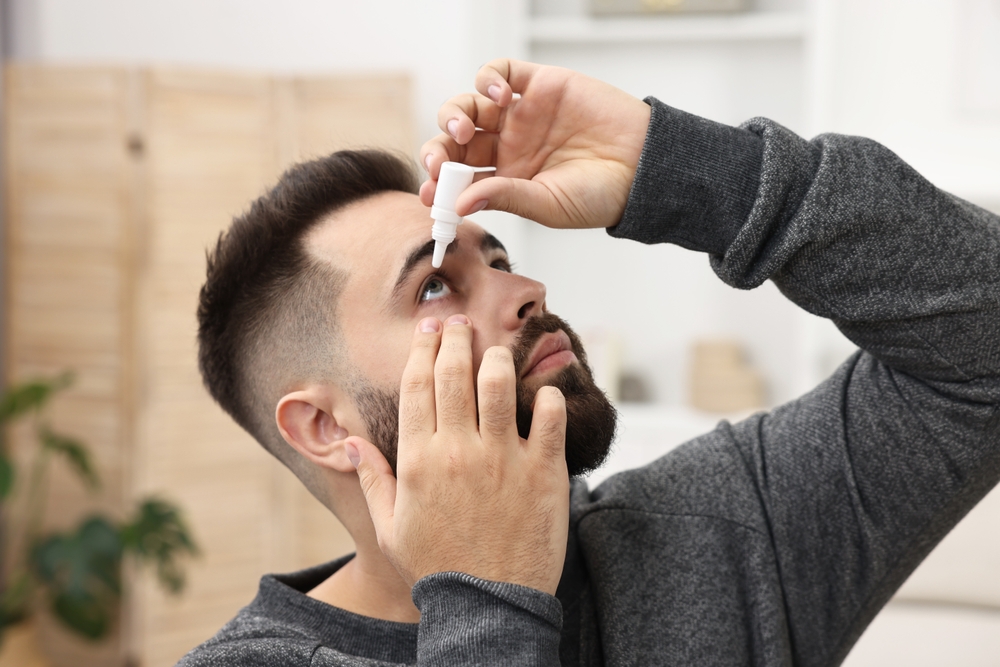
Tilt your head back while seated, or lie down flat if that feels more stable. Using one hand, gently pull your lower eyelid downward to create a small pocket between the lid and the eye, where the drop should land.
Look up and away from the tip of the bottle. Aiming your gaze upward keeps your natural blink reflex from triggering the moment the bottle approaches, one of the most common reasons drops miss their target.
Squeeze in a Single Drop
Hold the bottle close to your eye without letting the tip touch your eyelashes, eyelid, or the surface of the eye. Squeeze gently and release a single drop into the pocket you created. One drop is all the eye can hold, so resist the urge to add more. If you miss and the drop lands on your cheek, try again, since a drop that never reached the eye does not count toward your dose.
Close Your Eye and Apply Gentle Pressure
After the drop lands, close your eye gently. Avoid blinking rapidly or squeezing your eyelids tight, because both actions pump the medication toward the tear duct and out of the eye. Instead, press a fingertip lightly against the inner corner of your eye, next to the bridge of your nose, and hold it there for one to two minutes. This technique, called punctal occlusion, blocks the drainage channel and keeps the medication on your eye long enough to absorb. Many patients skip it, yet it does a lot to improve effectiveness.
Wait Between Multiple Drops or Ointments
If your doctor has prescribed more than one type of drop, give each one room to work. Wait about five minutes between different medications so the first is not immediately washed out by the second. When you use both a drop and an ointment or gel, apply the drop first, since ointments coat the eye and can block a liquid drop from absorbing.
Common Mistakes That Reduce Effectiveness
Even people who have used drops for years fall into habits that quietly undercut their treatment. The most common mistakes are:
• Instilling several drops at once, which overflows the eye and wastes medication
• Blinking hard immediately after the drop lands, flushing it into the tear duct
• Letting the bottle tip touch the eye or lashes, which contaminates the medication
• Failing to wait between two different prescriptions
• Skipping doses when symptoms feel better, especially with conditions that have no obvious symptoms
Contamination deserves special attention. Touching the tip to your eye, your fingers, or any surface can introduce bacteria into the bottle, and a contaminated drop can cause an eye infection. Recapping the bottle promptly and never sharing it with another person keeps the medication safe through the end of the prescription.

When to Call Your Eye Doctor
Technique solves many problems, but some situations call for professional guidance. Reach out if your symptoms worsen despite using your drops as directed, or if you develop new redness, swelling, pain, or itching that could signal a reaction.
Let your doctor know if you are consistently struggling to keep up with a complicated regimen, since there may be a simpler combination or a longer-acting option.
One rule matters above all others: never stop using glaucoma drops on your own, even if your eye feels perfectly normal, because the damage from rising pressure happens silently.
Patients recovering from cataract surgery should follow their post-operative instructions closely, since the antibiotic and anti-inflammatory drops prescribed afterward protect the eye while it heals. If discomfort lingers during recovery, ask before reaching for lubricating drops so you know they will not interfere with your other medications.
Struggling to keep up with your eye drop routine, or unsure whether your drops are working the way they should? Schedule an appointment at Premier Eye Care of Eastern Idaho in Idaho Falls, ID today.


